
Your Ultimate Guide to Beyerdynamic Headphones
Beyerdynamic headphones have a history every bit as rich as their sound quality. Founded by Eugen Beyer in Berlin in 1924, Beyerdynamic has remained a pioneering force in audio technology ever since then. During the rise of radio broadcasting, the company introduced its first range of professional-grade audio equipment, including the groundbreaking DT 48 headphones; the world’s first dynamic headphone model. Rapidly embraced by broadcasters worldwide, the DT 48 set a new standard for sound quality and reliability, establishing the “Dynamic Telephone” (DT) series as a hallmark of professional audio excellence.
Over a hundred years later, Beyerdynamic continues this legacy through its modern headphones that are expertly engineered for recording, mixing, broadcasting, and other demanding studio applications.
Why Choose Beyerdynamic?
Beyerdynamic has spent a century building a reputation for innovation, precision, and craftsmanship, and they continue to set the standard for German-engineered, professional audio equipment that excels in both performance and reliability. The company’s roots in German efficiency are evident in every product: meticulous design, high-quality materials, and rigorous testing ensure each device meets the exacting standards demanded by professionals.
From its early days supplying reliable broadcasting equipment to today’s modern offerings, Beyerdynamic has remained committed to delivering exceptional audio experiences. The brand is synonymous with headphones and microphones that combine outstanding sound quality, long-lasting durability, and professional-grade performance. Whether for recording, mixing, broadcasting, or live monitoring, Beyerdynamic products provide precise, natural, and detailed sound reproduction, giving users the clarity and accuracy required in professional audio environments.
Beyerdynamic headphones are built to withstand daily studio use, rigorous touring conditions, and long-term wear, making them trusted tools for engineers, broadcasters, musicians, and audiophiles worldwide.
Headphone Types
Open-Back vs. Closed-Back:
Open-back headphones have ear cups that allow sound and air to pass through vents or grills, giving a more natural and expansive listening experience. Because sound can interact with the environment, they often deliver a wider “soundstage” and more realistic imaging. However, they offer little isolation from external noise and tend to leak sound outward, making them better suited for quiet listening environments like home studios or dedicated listening rooms.
Pros of open-back headphones include a lifelike, airy sound, a spacious “speaker-like” feel, lower internal reflections, and often more accurate mid-frequencies.
Cons of open-back headphones include poor isolation (outside noise intrudes easily), sound leakage (people nearby may hear your audio). They are ultimately less suited to noisy or public environments
Closed-back headphones, by contrast, enclose the driver in a sealed chamber, blocking much of the ambient noise and preventing sound from escaping. This makes them far better for everyday use, travel, and recording situations where leakage must be minimised. Often, closed-back designs also yield a more pronounced bass response because the rear sound waves are constrained.
Pros of closed-back headphones include stronger passive noise isolation, less sound leakage, enhanced bass impact in many designs. They are more practical for commuting, studio work, or noisy settings.
Cons of closed-back headphones include a narrower soundstage with a less “open” feeling, with a potential for heat build-up over long sessions
Best Use Cases:
-
Use open-back models for critical listening, mastering, mixing, or immersive music enjoyment in quiet settings.
-
Choose closed-back models when you need isolation (e.g. in studios, during recording, while commuting, or in shared spaces).
Wired vs. Wireless:
Wired headphones connect via a cable and typically offer the best audio fidelity, lowest latency, and reliable performance without worrying about battery life. For studio work, professional monitoring, and critical listening, wired models are often preferred because they deliver consistent, uncompressed sound.
Advantages of wired headphones include top-tier audio quality (no compression or Bluetooth codec loss), zero latency, and no battery constraints, providing superior uninterrupted listening.
Drawbacks of wired headphones include a cumbersome cable management; they are also less convenient for mobility or active use
Conversely, Wireless headphones use Bluetooth or other wireless protocols, offering convenience and freedom from cords. They’re ideal for casual listening, commuting, exercise, or any situation where mobility matters more than absolute audio perfection. Modern wireless models often include high-quality audio codecs (e.g. aptX, LDAC) to bridge the gap.
Advantages of wireless headphones include cable-free freedom and portability, and convenient mobile use for workouts or casual listening. Many models include additional features like ANC, touch controls, and multipoint pairing.
Drawbacks of wireless headphones include possible signal compression or codec limitations, more notable latency (especially in video or gaming), and battery life constraints and charging requirements.
Best Use Cases:
-
Go wired for studio, critical listening, mixing, or whenever fidelity is critical.
-
Go wireless when comfort, mobility, and convenience are your priority and slight compromises in performance are acceptable.
On-Ear vs. Over-Ear:
On-ear headphones have compact ear pads that rest directly on the outer parts of your ears, rather than fully enclosing them. Because of their smaller size, they tend to be lighter and cooler (less heat around the ears).
Pros of on-ear headphones include a design that is more compact, portable, and lighter. They are often more affordable, and will overheat less during use.
Cons of on-ear headphones include a pressure on the ear that can become uncomfortable over long sessions, sound leakage and weaker isolation compared to closed-over-ear models, and the potential for distortion in comfort or sound if the ear flattening affects driver alignment.
Over-ear headphones (also known as circumaural headphones) feature larger ear cups that enclose your ears entirely. This design provides superior comfort for extended listening and better passive isolation when closed-back.
Pros of over-ear headphones include a minimal pressure on the ears which makes them more comfortable for longer sessions, better isolation (when closed-back), and more room for internal acoustic tuning and driver space.
Cons of over-ear headphones include their weight and bulk. They can cause heat buildup around ears over long use, and are less portable unless designed with foldable or swivel mechanisms.
Best Use Cases:
-
Choose on-ear if portability, lighter weight, or cooler operation is important, and listening sessions are moderate in duration.
-
Choose over-ear when comfort, sound quality, and isolation are priorities, especially for long sessions or professional work.
Technical Factors To Consider Before Buying
-
Purpose: Before purchasing a pair of Beyerdynamic headphones, consider what you’ll be using them for. Different models are tuned for different situations — whether for casual music listening at home, critical monitoring in a professional studio, immersive gaming, or portability during travel. For studio work, accuracy is usually paramount, so you might lean toward models with relatively neutral frequency response and possibly higher impedance versions (if you have good amplification). For everyday or casual use, lower-impedance models tend to be more practical and portable, sometimes with a sound signature that feels warmer or more forgiving.
-
Technology: One of Beyerdynamic’s signature technologies is their Tesla technology. Developed in-house, it uses a strong annular magnet made of neodymium and specific design and material choices to achieve high magnetic flux density (over one Tesla in many cases), which helps drivers deliver cleaner sound, lower distortion, greater efficiency, and a wider frequency response. These characteristics mean Tesla-equipped headphones often perform well even with sources that are not extremely powerful, and they tend to reproduce detail and clarity more faithfully than many conventional designs. Still, soundstage width and imaging will also depend heavily on whether the model is open-back or closed-back, and how the rest of the system is driven.
-
Impedance & Sensitivity: Two technical specs you should pay close attention to are impedance and sensitivity. Impedance (measured in ohms) indicates how much electrical resistance the headphone driver presents. Low-impedance models (e.g. 32 Ω or even 18 Ω) tend to be easier to drive from portable gear like phones, tablets, or laptops, often providing adequate volume without external amplification. Higher-impedance models (80 Ω, 250 Ω, or even higher) generally demand better amplification to reach their potential but can yield cleaner, more controlled sound if driven properly. Sensitivity describes how loudly the headphones will play for a given input power; higher sensitivity means less power is needed to reach a given loudness. Collectively, these two specs determine how well the headphones will work with your device, how loud you can expect them to get, and whether you’ll need extra gear to get the best performance.
-
Comfort & Design: Comfort and build quality are also crucial, especially for long listening or work sessions. Beyerdynamic is known for using replaceable ear pads (velour, artificial leather, etc.), well-engineered headbands, and durable materials. Velour pads are breathable and tend to be more comfortable over long periods (they allow airflow and reduce heat), though they may offer less isolation than leather or leatherette pads. The weight of the headphones, clamp pressure, and adjustability all affect how tiring they’ll be after hours of use. A well-designed headphone will balance sound performance with ergonomic comfort, which ensures wearability and longevity.
Popular Beyerdynamic Products
-
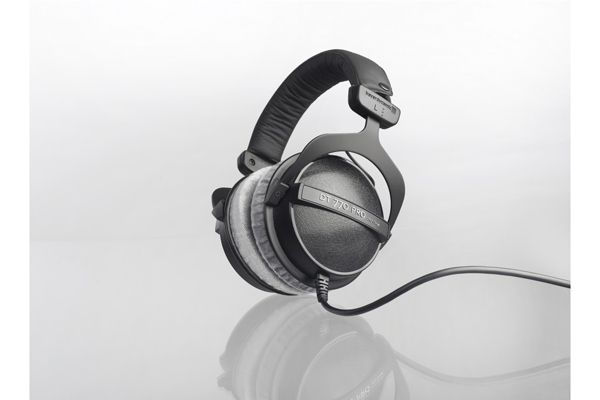
DT Series (DT 770, DT 880, DT 990): These models are beloved in professional and home studios alike for their reliability, sound quality, and adaptability. The DT 770 Pro closed-back headphones provide strong isolation, making it ideal for tracking and noisy environments. The DT 880 Pro semi open headphone offers a balanced middle ground; good isolation and a more expanded soundstage. And the DT 990 Pro open-back headphone emphasizes a wider spatial image, making it well suited for mixing and general listening in quiet setups. Across all DT models you’ll find robust build quality, excellent comfort (thanks to replaceable pads and thoughtful design), and sound signatures that lean toward clarity and neutrality with just enough character to make them engaging.
-
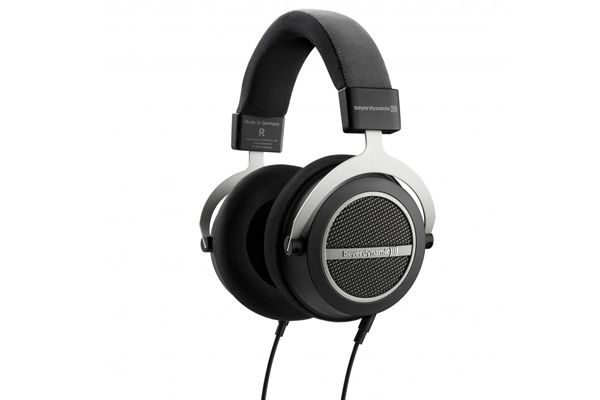
Amiron Series: The Beyerdynamic Amiron Home open back embodies Beyerdynamic’s high-end offering for discerning listeners who want high-fidelity sound in a home environment. With open-back design, rich tonal balance, and attention to detail in driver development, the Amiron Home aims to deliver a more “hi-fi” listening experience than many studio-based models do. Designed for relaxed, critical, and immersive playback rather than tracking or recording, it emphasizes natural timbre, smoothness, and musical articulation. While the wired Amiron is tailored for home systems with good amplification, Beyerdynamic also offers wireless variants with Bluetooth and high-quality codecs (Beyerdynamic Amiron Wireless) for users who value convenience without sacrificing audio performance.
-
MMX Series: The Beyerdynamic MMX 330 Pro (and other MMX models - Beyerdynamic MMX100) cater specifically to gamers and content creators. These headsets integrate Beyerdynamic’s audio heritage with communication features; most notably a built-in boom microphone and design geared toward voice clarity, spatial cues, and comfort for long sessions. Unlike pure music or studio models, MMX headsets are optimized to reproduce game audio, positional cues, and voice chat clearly, while still delivering enough musical fidelity to satisfy gamers who care about sound quality. They tend to have a closed or partially closed design to help isolate in noisy surroundings, and often include durable construction to withstand daily use.

Tips for Making the Right Choice
When choosing the right Beyerdynamic headphones, start by matching your headphones to your source equipment. Higher-impedance models such as the DT 880 PRO (250 Ω) or DT 990 PRO (250 Ω) perform best when paired with a quality headphone amplifier or DAC, while lower-impedance versions or wireless models work well directly with laptops, smartphones, or audio interfaces.
It’s also worth considering long-term value. Beyerdynamic designs many of its headphones with replaceable parts—ear pads, headbands, and cables—which helps extend their lifespan and makes maintenance easy, an advantage for professionals and frequent users.
Finally, think about your intended use. For music production and mixing, the DT 770, DT 880, and DT 990 Series provide precise sound reproduction and reliability. For gaming and streaming, the MMX Series delivers immersive sound and clear microphone performance. For audiophiles, the Amiron Series offers an expansive soundstage and luxurious comfort.
Conclusion
Whether you’re mixing in the studio, gaming online, or simply enjoying music at home, Beyerdynamic offers a headphone for every lifestyle. From the studio-grade precision of the DT Series, to the immersive gaming experience of the MMX line, and the refined, high-fidelity sound of the Amiron Series, each model reflects a century of German engineering excellence. When choosing your pair, consider how you’ll use them—match impedance to your audio setup, and value models with replaceable parts for long-term performance. Explore Minidisc’s range of Beyerdynamic headphones and accessories to find the perfect fit for your needs, and elevate your listening experience today. You can also check out our many other high quality audio products here. Got a question? You can get in touch with us directly here.