
The Best In-Ear Monitors for 2026: Your Ultimate Guide to 64 Audio IEMs
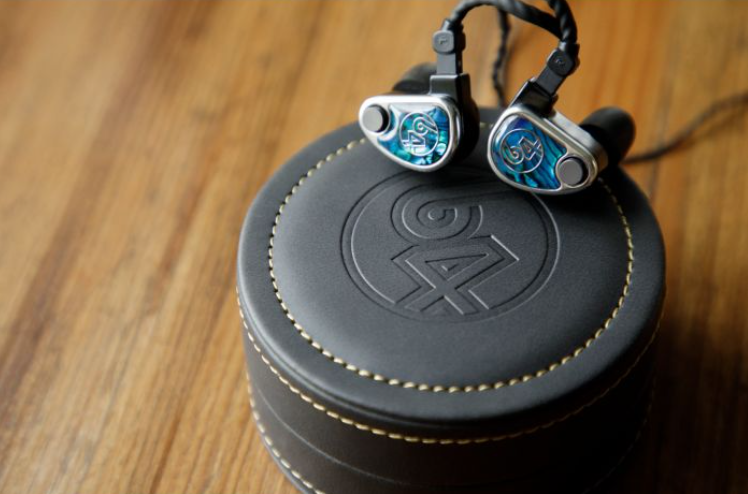
If you’re passionate about high-performance in-ear monitors, a.k.a IEMs, chances are you’ve encountered at least one of 64 Audio’s extensive lineup of multi-driver IEMs while exploring your interests. Based in Vancouver, Washington, 64 Audio has earned a hard-won reputation for producing a versatile range of universal in-ear monitors, consistently delivering performance, clarity, and innovation. With a wide range of products, the company offers a clear commitment to catering to a wide spectrum of budgets and listening preferences
64 Audio’s custom in-ear monitors are highly regarded by some of the biggest names in professional audio; from on-stage performers and recording artists to producers, mixing engineers, and other industry professionals who demand precision and reliability in their monitoring solutions. You can browse 64 audio IEMs here, or scroll down to learn more.
About 64 Audio
To those new to the world of audiophilia, it’s common to notice that some audio companies have a distinctive “house sound”, i.e. a set of sonic characteristics that appears consistently across their product range. 64 Audio is one such brand. This has allowed IEM to carve out its own unique identity, offering subtle but meaningful differences in tuning, imaging, and overall listening experience.
64 Audio began life in 2010 as 1964 Ears, founded by sound‑engineer and musician Vitaliy Belonozhko in his spare bedroom. Dissatisfied with the state of in‑ear monitors available at the time, he experimented with crafting custom IEMs that offered better clarity and fit than the standard “floor wedges” or off‑the‑shelf models. The company’s first publicly released product, the “Quad” — a four-driver IEM — marked the start of its journey. Early steps included not only product development, but also refinements based on feedback, as the company gradually moved into more professional workshop spaces and began to attract interest from working musicians.
As 1964 Ears evolved, so did its ambitions. In 2015, the company rebranded to 64 Audio, reflecting a broader vision and signalling its growth beyond local custom‑fit IEMs. Over the following years, 64 Audio introduced a succession of technological innovations — such as their patented venting system (apex), custom‑fit shell production using digital 3D processes (3D‑Fit), and later an open‑driver architecture (tia) offering particularly transparent sound. These advances helped the brand expand its product range to include both custom in-ear monitors for professional musicians and high‑end universal IEMs for audiophiles and everyday listeners.
Today, 64 Audio is trusted by top-tier artists, engineers, and audiophiles around the world because it delivers on the core qualities that matter for professional monitoring: precision, reliability, and craftsmanship. Their monitors are widely regarded as delivering accurate, natural, and balanced sound — essential for live performance, mixing, or critical listening — while innovations like apex reduce ear‑fatigue and protect hearing, making them suitable for intensive, long-term use. Their build quality, custom‑fit options, and consistent sound across models give users the confidence to rely on 64 Audio in high-stakes environments such as live shows and studio sessions
64 Audio Signature Technologies
64 Audio products contribute to a listening experience that emphasises accuracy, consistency, comfort, and reliability. This is what has made them the go-to choice for professional musicians, engineers, and serious audiophiles, who all trust 64 Audio for critical monitoring, live performance, and long listening sessions. And it can all be boiled down to four chief technological breakthroughs…
- apex (Air Pressure Exchange): The apex system is a patented venting solution that relieves the air pressure that builds up in a sealed ear canal when using in‑ear monitors. By allowing that pressure to escape — while still maintaining effective noise isolation — apex reduces the “vacuum” effect and improves listening comfort. This translates to less ear fatigue during extended use, a more natural eardrum movement, and a more open, realistic soundstage.
- tia (Tubeless In‑Ear Audio): The tia design abandons the traditional use of narrow sound tubes or dampers around the drivers, replacing them with a tubeless, single‑bore acoustic layout paired with open‑balanced‑armature drivers (or tia‑specific drivers depending on the model). This allows sound to disperse more freely and without resonance or distortion that tubes can introduce. The result is cleaner, more transparent, and more natural audio reproduction — with a smooth frequency response, wide spatial presentation, and a more “speaker‑like” quality.
- LID (Linear Impedance Design): LID is a proprietary circuit design intended to stabilise the impedance presented to playback sources (smartphones, stage packs, DACs, amplifiers, etc.). Because different source devices output at varying impedance levels, a multi‑driver IEM without impedance equalisation can exhibit shifting tonal balance depending on the source. LID corrects for these variations, ensuring a consistent and reliable sound signature regardless of the playback device. That consistency is particularly valuable for musicians and engineers who switch between different rigs.
- 3D‑Fit (Custom Fit & Shell Manufacturing): For custom in‑ear models (CIEMs), 64 Audio uses 3D‑Fit, a process that begins with precise ear impressions, which are then digitally rendered and 3D‑printed into custom shells using hypoallergenic materials. This method preserves the fine detail of ear anatomy, allowing for a secure, comfortable, and highly accurate fit. Beyond comfort, 3D‑Fit enables precise internal acoustic tuning — driver placement, chamber geometry, venting paths — that would be difficult or impossible with traditional shell‑making methods. The result is custom‑fit monitors that combine comfort, durability, and acoustic precision.
Product Line Breakdown
Universal IEMs
Targeted Users: Audiophiles, content creators, studio listeners, casual music enthusiasts who prefer a ready-to-wear, versatile solution.
Popular Models:
- U4s: 4-driver hybrid (1 dynamic + 3 balanced-armature/tia). Balanced and slightly warm sound; engaging mids, clear highs, good sub-bass. Ideal for casual listening, electronic/rock genres.
- U6t: 6-driver universal (1 tia high, 1 high-mid, 2 mids, 2 lows). Natural and balanced tuning, smooth treble, strong mid-bass. Suitable for studio monitoring, live stage, or content creation.
- U12t: 12-driver universal (1 tia high, 1 high-mid, 6 mids, 4 lows). Rich, immersive U-shaped signature with controlled bass, detailed mids, and smooth treble. Best for critical listening, mixing, and complex music.
- tia Fourté: Flagship universal with full tia system. Emphasis on upper mids and treble detail, less bass, very transparent. Ideal for classical, acoustic, or analytical listening.
Custom IEMs (A-Series)
Targeted Users: Professional musicians, live performers, content creators, audiophiles seeking perfect fit and maximum isolation.
Popular Models:
- A6t: 6-driver custom CIEM, smooth and balanced tuning. Excellent for on-stage monitoring and studio use.
- A12t: 12-driver custom CIEM with tia technology, extended clarity and imaging. Great for critical monitoring and professional performance.
- A18s: 18-driver professional CIEM, designed for maximum detail retrieval and separation. Ideal for studio engineers and live performers requiring precision.
- A18t: 18-driver Tzar flagship CIEM with advanced tuning and apex modules. Designed for high-end stage monitoring and audiophile listening.
Benefits of Custom Fit:
- Tailored shells ensure consistent, secure fit and comfort for long sessions.
- Superior isolation reduces stage bleed and ambient noise.
- Optimised internal driver placement improves sound clarity, imaging, and frequency response.
- Preferred for stage monitoring because it maintains consistent tuning regardless of movement or sweat, allowing performers to hear mixes accurately.
IEM Comparison Table
| Model | Technologies | Drivers/Config | Tuning / Sound Signature | Typical Use Cases |
| 64 Audio U4s | tia, Apex, LID | Hybrid: 1 dynamic + 1 BA low‑mid + 1 BA high‑mid + 1 tia high driver | Balanced-leaning with solid bass and natural mids/highs; generally smooth treble and good clarity | Everyday listening, broad‑genre playback, casual audiophile use, portable use, content consumption |
| 64 Audio U6t | tia, Apex, LID | 6 balanced armature drivers: 1 tia high, 1 high-mid, 2 mids, 2 lows | Balanced-natural tuning; transparent mids, controlled lows, good instrument separation; relatively neutral but slightly warm presentation | Musicians, mixing/monitoring, live/studio work; also for audiophiles wanting a versatile all‑round IEM |
| tia, Apex, LID | 12 balanced armature drivers: arranged for multi‑band coverage (lows, mids, highs) | Bass-and-vocal oriented tuning: deep, rich lows; warm mids; detailed but smooth highs; wide soundstage and good imaging |
High-end universal IEM for critical listening, mixing/mastering, audiophile music playback, versatile genre coverage
|
|
| 64 Audio A12t (Custom 12‑driver) | tia, Apex, LID, custom‑fit shell option | 12 balanced armature drivers (custom‑fit) | Reference-style tuning: clean bass, detailed mids and highs, accurate imaging — balanced and faithful across frequency rang | Studio monitoring, mixing/mastering, touring musicians, high‑fidelity listening for critical ears |
| 64 Audio Nio (9‑driver hybrid) | tia, Apex, LID | 9-driver hybrid (dynamic + BA/tia) | Hybrid tuning combining dynamic-driver warmth and BA/detail — likely to give strong bass presence + full-range detail; good balance between bass impact and clarity | Audiophile listening, broad-genre playback, users wanting a hybrid flavour (bass + detail) |
How to Choose the Right 64 Audio IEM
Before investing in a pair of 64 Audio IEMS, try factoring in the following considerations:
- Purpose: When choosing a 64 Audio IEM, start by considering your purpose: are you using them for live stage performance, studio mixing, home listening, or commuting? Your primary use will influence which features are most important—like isolation for stage work or neutral sound for studio monitoring.
- Budget: Next, set a budget. IEMs range from entry-level universal models to premium custom-fit options. Higher-end models generally offer better fidelity, fit, and isolation, but even more affordable models retain the brand’s signature sound.
- Preferred Sound Signature: Think about your preferred sound signature. 64 Audio models cover a spectrum from bass-forward, warm, or musical tunings to neutral, reference-style responses. Choose one that matches your listening preferences or professional needs.
- Universal vs Custom: Decide between universal vs custom-fit. Universal IEMs are ready to use out of the box, flexible, and easier to resell, while custom IEMs are molded to your ears for consistent comfort, superior isolation, and long-term wearability—especially important for performers or long studio sessions.
- Isolation Requirements: Consider your isolation requirements. For loud environments or stage use, high passive isolation protects your hearing and improves clarity. For commuting or home listening, you may prefer less isolation so you can stay aware of your surroundings.
- Sensitivity to Fit/Comfort: Finally, evaluate fit and comfort sensitivity. A proper fit is critical not only for comfort but also for sound quality; poorly fitting IEMs can reduce bass response and cause fatigue. If you are sensitive to ear pressure or wear IEMs for long periods, custom-fit models or well-fitted universal IEMs with quality tips are essential
Conclusion
When it comes to high-end in-ear monitors, 64 Audio sets the benchmark with advanced technologies that offer exceptional sound quality, and options to suit every listener. Whether you’re performing on stage, mixing in the studio, commuting, or enjoying music at home, there’s a 64 Audio IEM designed for your needs. You can peruse the Minidisc range of in-ear earphones here, browse our range of custom in-ear monitors here, or explore the 64 audio IEMs here. For all inquiries, contact us directly.